ECE 6323 Spring 2014 Mid-term
U of Houston
Han Le - Copyrighted
1. (25 pts) Loss in fiber
1.1 Comparing wavelength channels
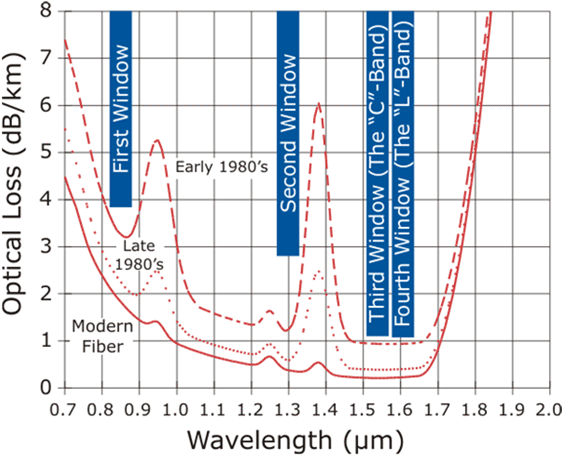
The following signals: 1.55 μm, 1.3 μm, 1.1 μm, and
0.87 μm are launched into a modern fiber (see above) with initial
power 1 mW each. Plot their powers of as a function of length from
0 to 100 km on the dBm scale. (all on the same plot) (Use
approximate values you can get from the chart by magnifying the
figure) (note: dBm scale is as
follow: 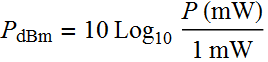 )
)
1.2 Comparing channels - part 2
Do the same as 1.1, but in terms of number of photons on log 10 scale.
1.3 Let the signals now be Gaussian pulses
Let the pulse have a power envelope  ,
where σ=10 ps. As the pulse travels, it also suffers back
scattering which means that some of the light is scattered
backward, opposite to the direction of its travel. The scattering
was both from intrinsic mechanism and extrinsic causes such as
fiber structure imperfection.
,
where σ=10 ps. As the pulse travels, it also suffers back
scattering which means that some of the light is scattered
backward, opposite to the direction of its travel. The scattering
was both from intrinsic mechanism and extrinsic causes such as
fiber structure imperfection.
Let 2 Gaussian pulses of 1.55 μm and 1.3 μm be launched into a
10-km fiber, joined with another segment of 15-km fiber, with a
3-dB reflection at the fiber joint.
Plot the relative intensity of backscattered light as a function of time (over
the roundtrip time-of-flight in the fibre). Make also a plot just around
the time when the pulses are passing the fiber joint.
Assume that the group velocity effective index is 1.46 for 1.55 μm
and 1.47 for 1.3 μm. Assume that there is no reflection at the end
facet of the whole fiber.
Hint: see discussion of OTDR below.
1.4 OTDR application 1
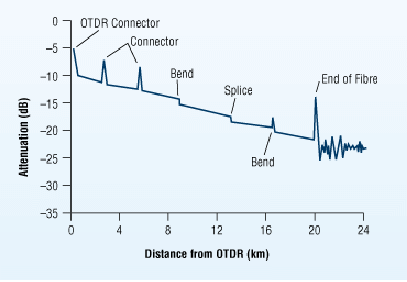
What is done in 1.3 is called OTDR (refer to lectures). By simply converting time-to-distance, we can obtain a plot as shown above. Generate an OTDR plot for your results in 1.3 (simply convert time to distance), and then analyze the result of the plot above to determine the fiber loss coefficient. Notice that a bend and a splice have no “spiky” reflection but just a step drop, discuss the significance of this observation.
1.5 OTDR application 2
Do you think you can indirect;y measure the fiber group velocity dispersion over a wide range of wavelength (e. g. from 1.3 to 1.7 μm) with OTDR? How would you do it?
2. (25 pts) Light pulse shape
In the following, use any software you like to do calculation. If you are not familiar with any calculation software, just write out the analytic part and explain how it should be done, then sketch drawing what you think it should look like.
Consider 2 light pulses with a power envelop
as given below:
Pulse type
A.  {t}≤
T
{t}≤
T
=0 elsewhere
Pulse type
B. 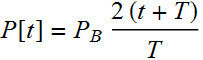
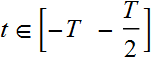

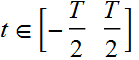
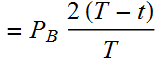
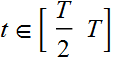
=0 elsewhere
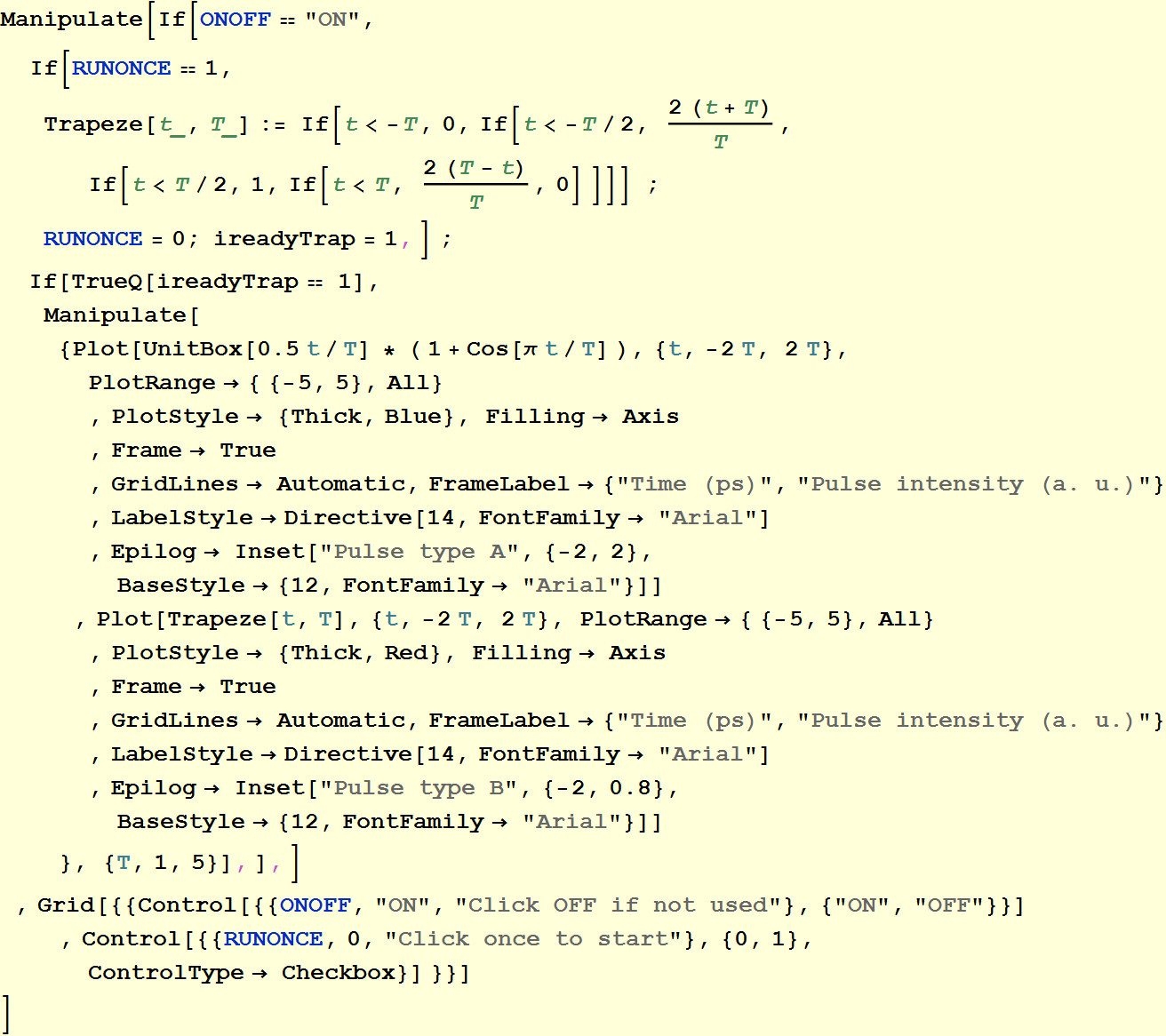
This is what they look like:
2.1 Normalization
Calculate  ,
and
,
and  so that the total energy of each pulse is equal to 1: this is
called normalization. Plot all on the same plot after you
normalize them to compare.
so that the total energy of each pulse is equal to 1: this is
called normalization. Plot all on the same plot after you
normalize them to compare.
Example
We normalize pulse A:  {t}≤
T
{t}≤
T


To make  ,
we choose
,
we choose 
Hence: 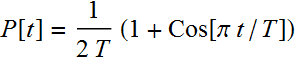 {t}≤
T
{t}≤
T
We can also
write:  {t}≤
T
{t}≤
T
2.2 Pulse with carrier
Suppose you want to use this pulse as an envelope
on a carrier  .
Write the electric field expression for each one of them in vacuum
or air (refractive index=1). Remember that they must satisfy the
wave equation.
.
Write the electric field expression for each one of them in vacuum
or air (refractive index=1). Remember that they must satisfy the
wave equation.
To verify your results, plot the electric field of the traveling
pulse (the same way we plot in our lecture); (plot each pulse in a
separate graph). We will let the carrier wavelength be 1.5 μm, and
let T=0.1 ps. Plotted
them over a distance of your choice.
Example
For any pulse, it can be shown that if the E field
envelope at one point in space is F[t], then the traveling pulse
is:

in air or vacuum.
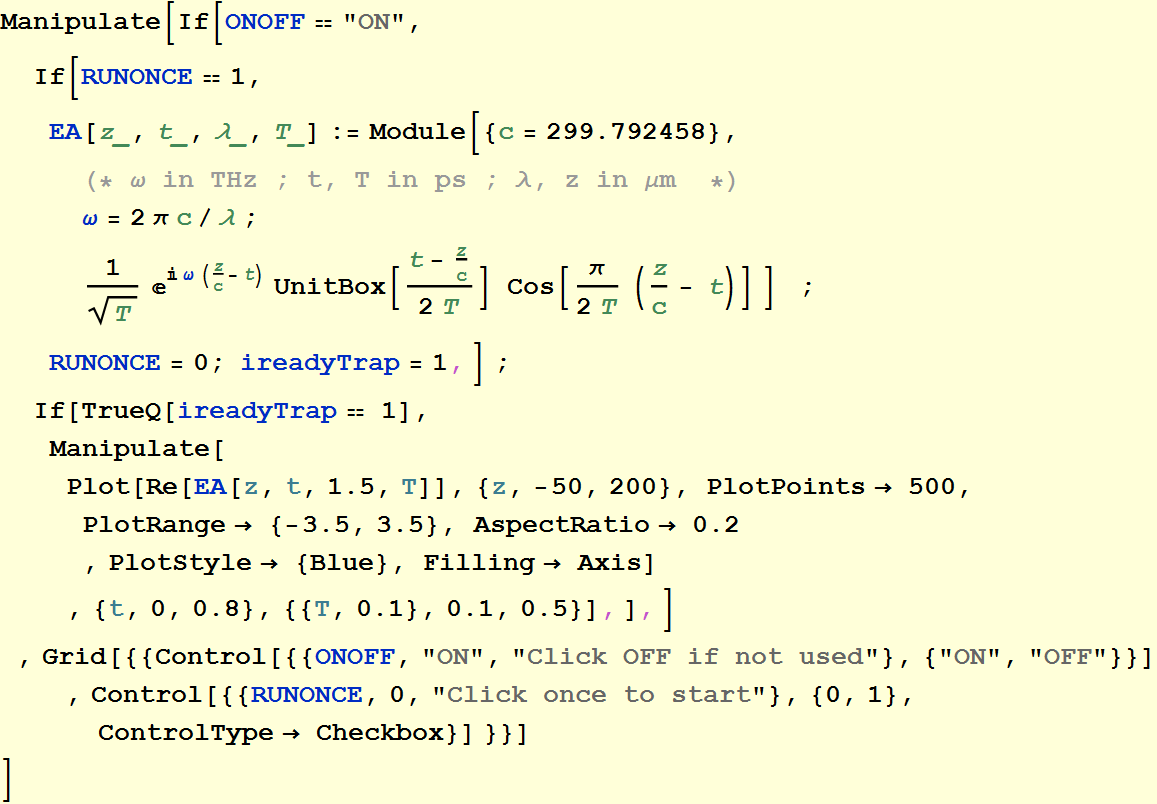
Example for pulse type A:

Here is how we plot it:
Do similarly for pulse type B.
2.3 Spectrum of a pulse
Calculate and plot to compare the optical spectra of the pulses (plot them on the same plot), using parameters given in 2.2.
Example for pulse type A
The optical spectrum of the pulse is: 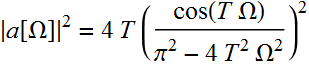
Here is how to plot it:
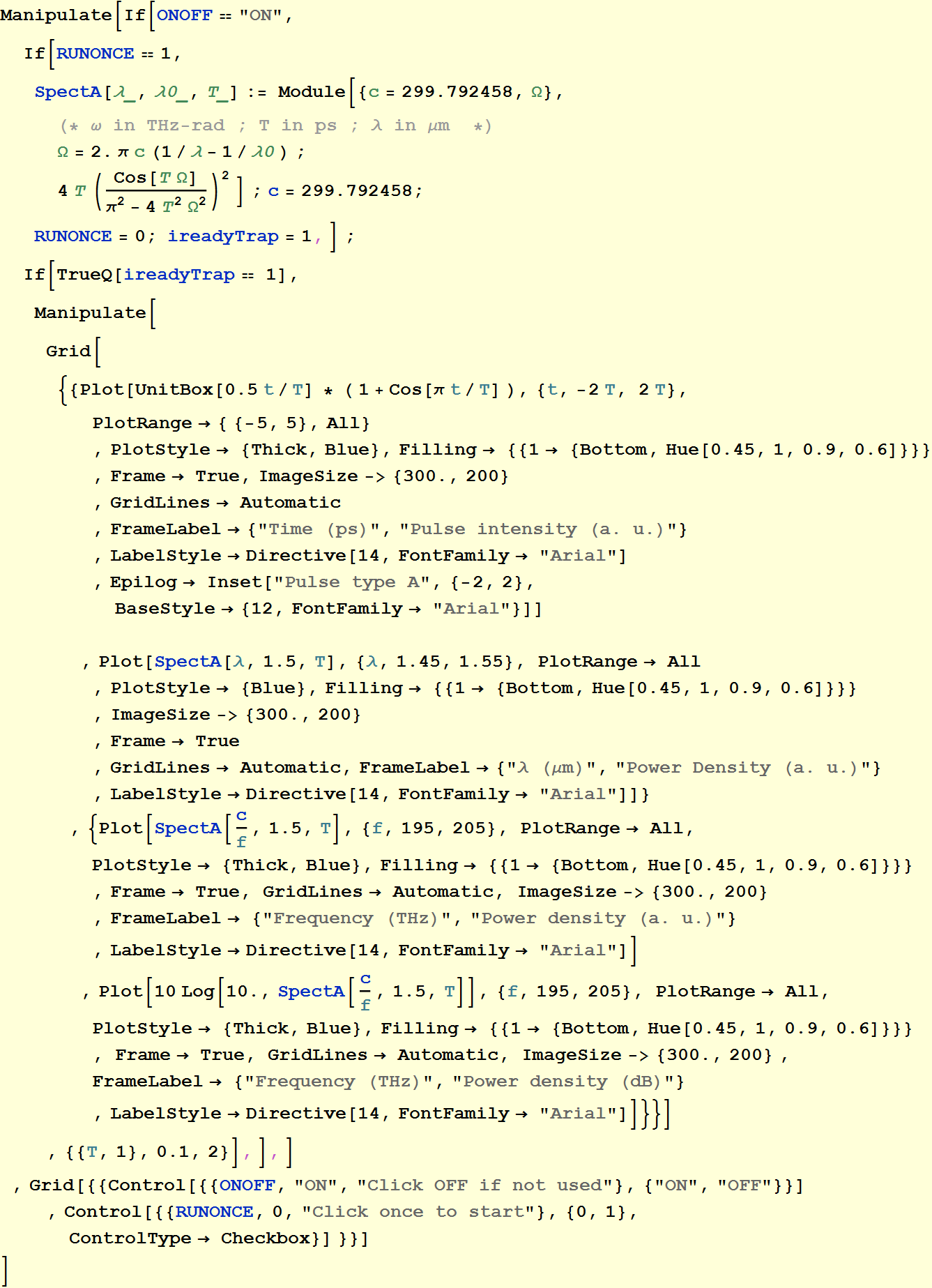
Below is a plot in frequency, unit THz
Do the same for pulse type B.
3. (80 pts) Pulse propagation in fiber
3.1 Group velocity
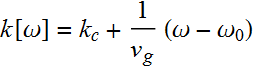
We have treated the case of no quadratic term and
only have to deal with the group velocity for Gaussian pulse. This
behavior is of general validity and not just for Gaussian pulse.
Do this for pulse type B on problem 2: assume that:
 (1)
(1)
where: 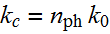 ;
; 
and we refer to  as the phase velocity index, which is the same as the modal index.
Just for your information, we also
define:
as the phase velocity index, which is the same as the modal index.
Just for your information, we also
define:  as group-velocity index.
Write an expression for pulse B in problem 2, propagating in fiber
given Eq. (1) above.
Example for pulse A:
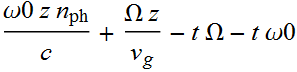
From the above result:
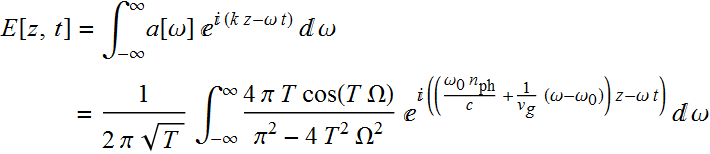
We rewrite: 
Hence: 
Use the same result as above:

Note that we have a carrier wave that travels with the phase velocity and an envelop that travels with group velocity. This can be prove also for pulse type B.
Derive or write an expression of your best guest for pulse B, then plot.
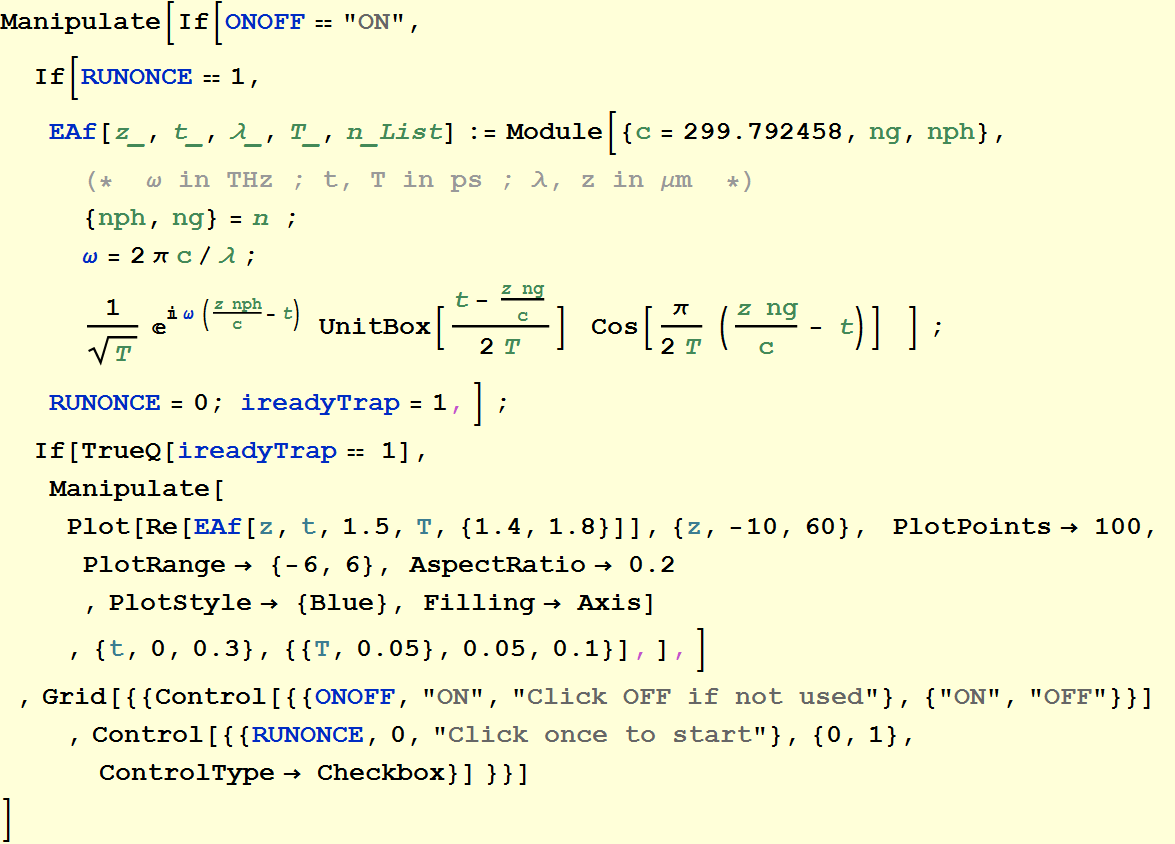
3.2 Plot to verify
Plot what you have in 3.1 to verify that you get it
correctly, use these parameters: λ=1.5 μm,  =1.8,
=1.8,
 =1.4,
and T=0.05 ps (we make
it very short so that you can see both carrier and envelope. Also
we exaggerate
=1.4,
and T=0.05 ps (we make
it very short so that you can see both carrier and envelope. Also
we exaggerate  .
The approx number of cycles in the pulse is 2*0.05 ps x 200 THz=
20 cycles.).
.
The approx number of cycles in the pulse is 2*0.05 ps x 200 THz=
20 cycles.).
Example
Do the same for pulse type B.
3.3 GVD Dispersion. Plot pulse envelopes as a function of time, assuming you travel with them at their group velocity (see lecture note).
Now, we will include the dispersion
term:  (2).
(2).
You will compare the shape of 2 pulses in Prob. 2: both with λ=1.5
μm, T=0.1 ps as they
travel in a fiber. Let d
be a variable so that you can put in different values in your
plot. Use numerical integration.
You should see the pulse broadens as a function of distance, and
the larger GVD coefficient d
is, the faster is the broadening.
Do this part only if you have appropriate software and knowledge of numerical method. Otherwise, use your best guess.
Example for pulse A
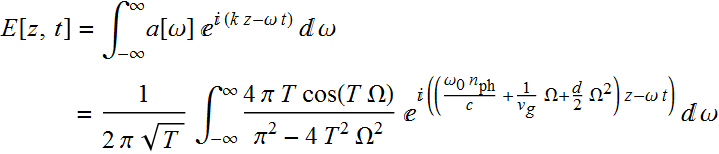
The E field is:
we have
substituted 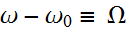


Again, we write: 
Then: 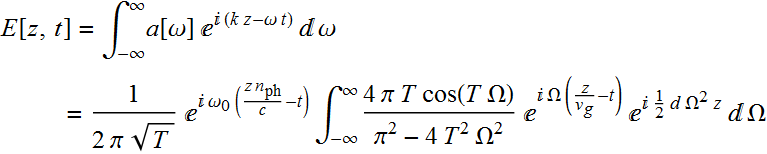
Since we travel with the pulse, we let 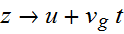 :
:
Then: 
The power envelop is:

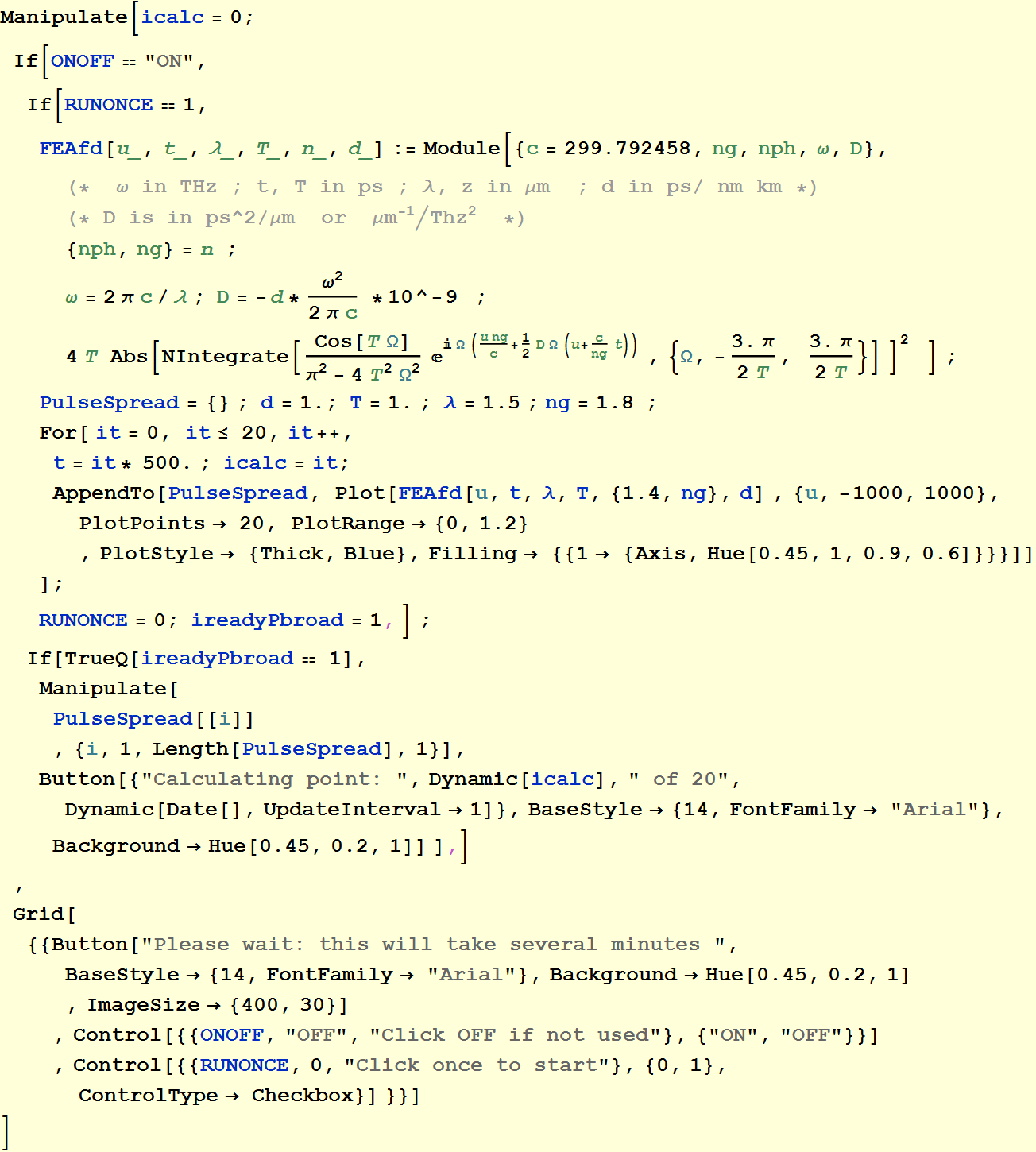
Do the same thing for pulse B.
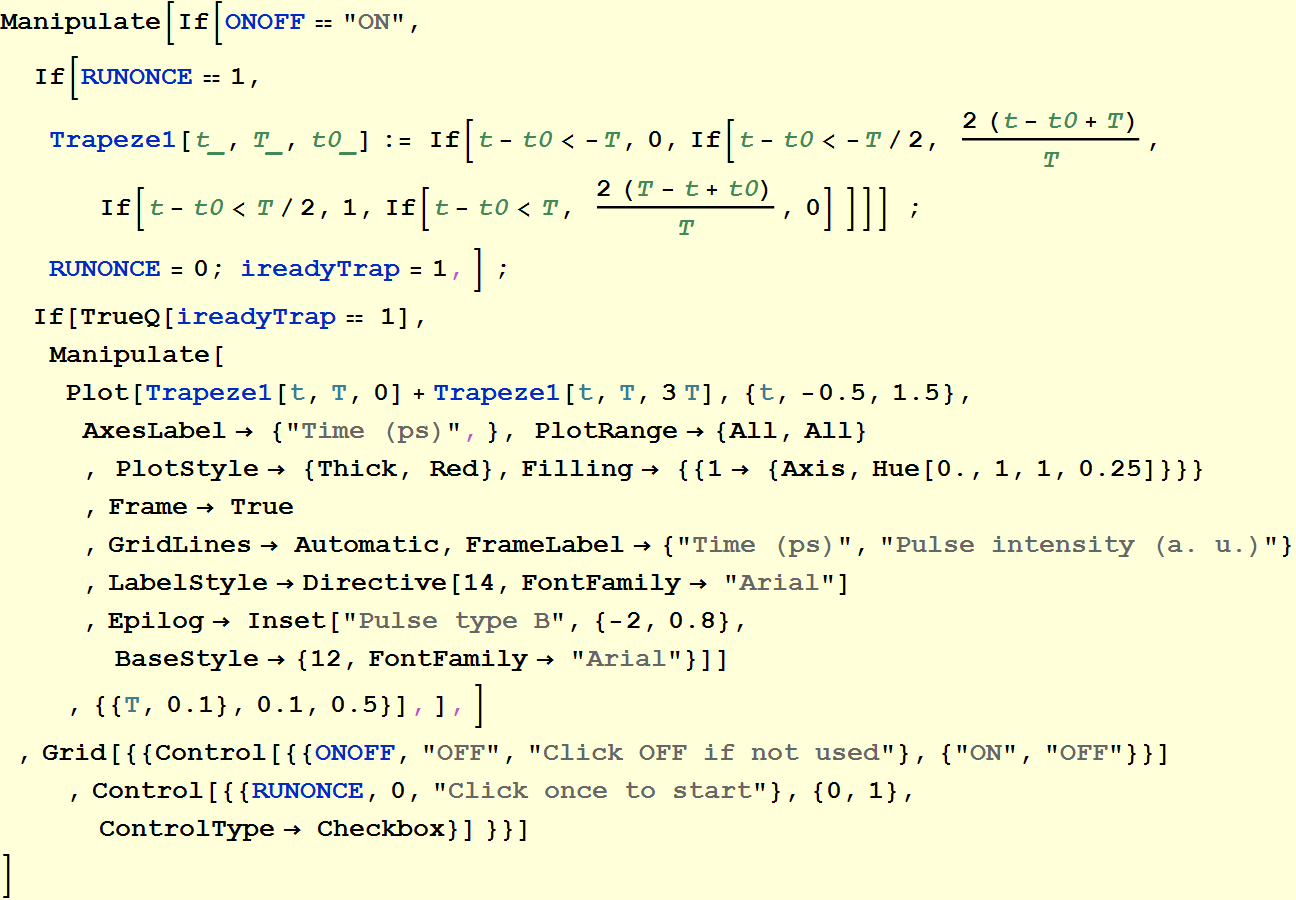
3.4 Plot 2 pulse envelopes of pulse type B that are separated by 0.3 ps as a function of time, assuming you travel with them at their group velocity (see lecture note). You should see them overlapped at certain distance. Use d=1 ps/(nm km)
Do this part only if you have appropriate software and knowledge of numerical method.
You should see the pulse broadens as a function of distance, and the larger GVD coefficient d is, the faster is the broadening. As a hint, below is the plot of envelop of 2 type-B pulses separated by 0.3 ps (and you can vary them).
4. (20 pts) Laser - problem 1
See the demonstration below to review concept of laser cavity and modes. Vary cavity length.
4.1 Laser mode 1
A 1.55 μm semiconductor Fabry-Perot laser with an
effective index  ,
with 250 μm long cavity. What are the laser longitudinal
frequencies (in THz) between 1.53 μm and and 1.56 μm.
,
with 250 μm long cavity. What are the laser longitudinal
frequencies (in THz) between 1.53 μm and and 1.56 μm.
4.2 Laser mode 2
In reality, the effective index  is NOT constant vs frequency as we have learned. In fact,

This becomes:


where  is the phase and
  is group velocity index, and d
is the dispersion coefficient. Let
is group velocity index, and d
is the dispersion coefficient. Let  and
and  at
at  =1.5500
μm be 3.6 and 3.85, respectively, and
=1.5500
μm be 3.6 and 3.85, respectively, and  .
Calculate again the laser longitudinal frequencies (in THz)
between 1.53 μm and and 1.56 μm. Compare with results in 4.1 by
subtracting to the frequencies and show the differences.
.
Calculate again the laser longitudinal frequencies (in THz)
between 1.53 μm and and 1.56 μm. Compare with results in 4.1 by
subtracting to the frequencies and show the differences.
4.3 Laser mode 3
VCSEL has very short cavity. Let a VCSEL have an
effective cavity length of 4 μm, and  .
The gain spectral band is from 1.52 μm to 1.58 μm (very broad).
What are the possible laser frequencies? Compare with results in
1.1 and discuss about how to obtain single longitudinal mode
operation.
.
The gain spectral band is from 1.52 μm to 1.58 μm (very broad).
What are the possible laser frequencies? Compare with results in
1.1 and discuss about how to obtain single longitudinal mode
operation.
4.4 Laser gain
From the lecture, we know that a simple expression
for the condition of laser oscillation is:
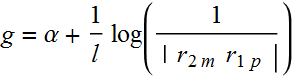
(Look up the meaning of various terms). Let the laser in 4.1 above
have 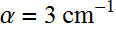 ,
,
 initially. Then one facet is AR coated so that
  vary from 0.565 (initially before coating) to
  .
Plot the gain as a function of
.
Plot the gain as a function of  .
.
4.5 Laser threshold
Assuming that the laser in 4.4 above has a
gain-current relation (highly simplified):
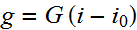
for current i >
 ,
and
,
and 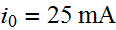 .
Let
.
Let  .
Plot the change of threshold current as a function of
.
Plot the change of threshold current as a function of  as in 1.4.
4.6 Laser power output
Let the laser in 4.4 has a power slope quantum efficiency 50%. Let its thereshold be 25 mA. Plot the laser power output as a function of current from 0 mA to 100 mA.
5. (50 pts) Laser - problem 2
Read, search for the original technical document of
this article:
http://www.photonicsonline.com/doc/new-laser-brings-faster-internet-0001
(see caltech.edu and google search it).
Describe to the best of your understanding how this laser
technology enables higher rate of data transmission. The purpose
is only for you trying to critically read and apply various laser
concepts we have learned as much as possible. There is no need
trying to understand every thing. Just key concept.
